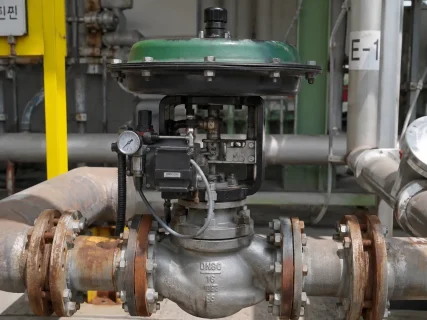

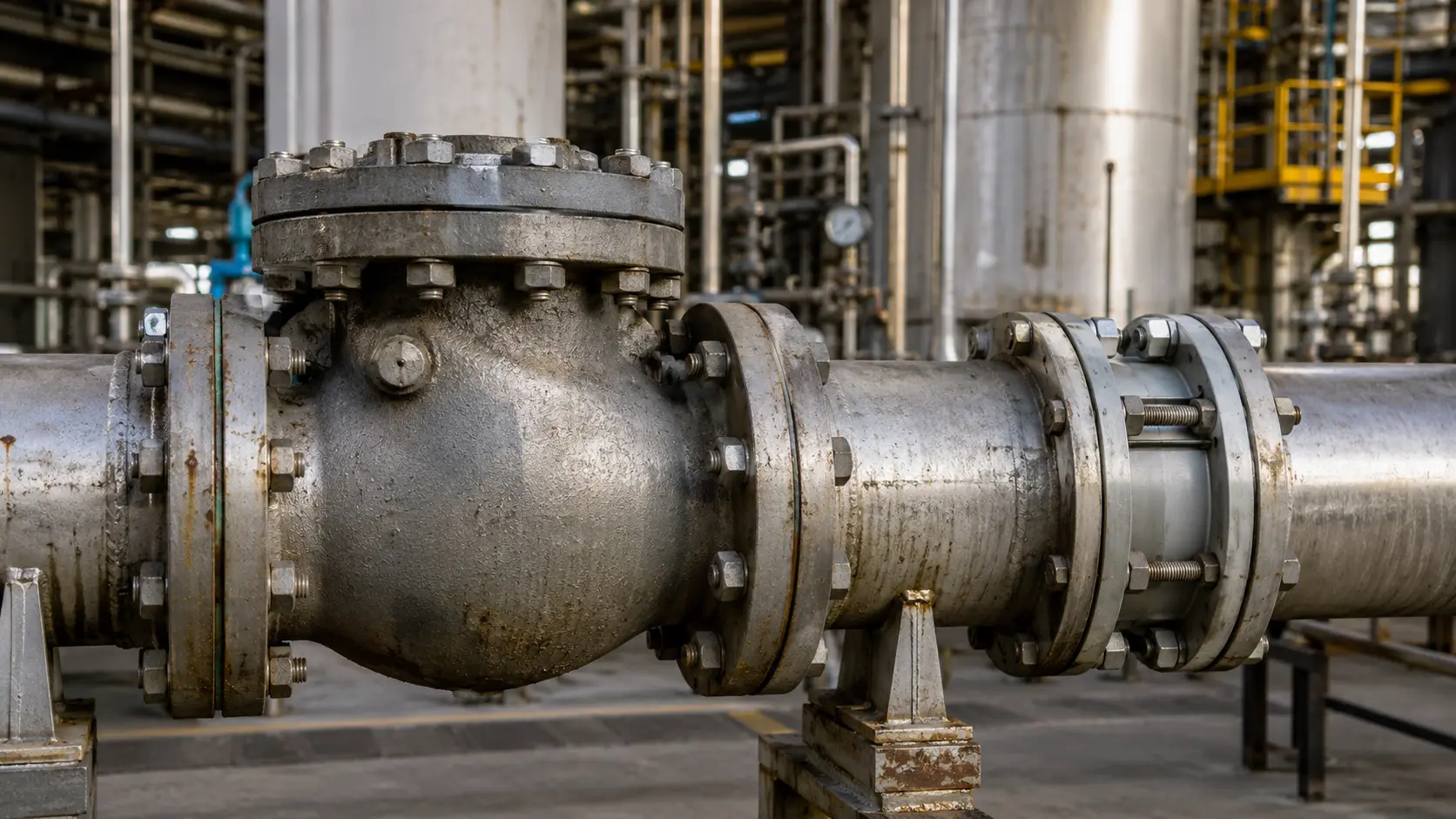
For reverse flow prevention, backflow prevention, water hammer risk, and reliable pipeline operation, Swing Check Valve vs Dual Plate Check Valve is an important comparison when selecting a check valve for industrial piping. The right choice depends on the system’s flow characteristics, pressure rating, temperature, valve size, materials, and required closing response. ValvesOnly Europe, a Valve Manufacturer in Germany, provides industrial check valves for water, oil and gas, petrochemical, power generation, marine, and process piping systems.
The two designs differ mainly in their closure mechanism. A Swing Check Valve uses one hinged disc, while a Dual Plate Check Valve uses two spring-loaded plates. This difference directly influences reverse flow velocity, closing time, pressure surge, pressure drop, valve slam, and backflow control.
Swing Check Valve vs Dual Plate Check Valve:
A Swing Check Valve provides a relatively unobstructed flow path when fully open, which can help achieve low flow resistance. However, the hinged disc has greater travel before reaching the seat.
A Dual Plate Check Valve uses two plates with shorter travel and spring assistance. The plates begin returning toward the seat as forward flow decreases, allowing faster closure and potentially reducing reverse flow before shut-off.
For systems with rapid flow reversal, the closing characteristics can be more important than the basic non-return valve function.
| Parameter | Swing Check Valve | Dual Plate Check Valve |
| Closure element | Single hinged disc | Two spring-assisted plates |
| Closing response | Flow dependent | Spring assisted |
| Reverse flow before closure | Can be higher | Generally lower |
| Valve slam | Application dependent | Can be lower; verify against system deceleration and valve closing data |
| Pressure drop | Generally low when fully open | Design dependent |
| Face-to-face dimension | Generally longer | Short pattern |
| Weight | Generally higher | Generally lower |
| Installation space | Higher | Compact |
Water Hammer and Check Valve Closing Response:
Water hammer results from a rapid change in fluid velocity that creates a transient pressure wave through the piping system.
A Dual Plate Wafer Check Valve has spring-assisted plates with short travel, allowing rapid closure as forward flow decreases. This can limit reverse flow before the valve closes.
A Pressure Seal Swing Check Valve has a hinged disc with longer travel. Under rapid flow reversal, the disc may close after reverse velocity has already developed.
The actual pressure surge depends on:
- Fluid velocity
- Pipeline length
- Fluid density
- Valve closing time
- Pump shutdown characteristics
- Pipeline configuration
- Reverse flow velocity
For critical systems, transient flow analysis should be performed rather than selecting a check valve based only on its nominal size. Valve type alone does not establish the resulting surge pressure.
Check Valve Selection for Pump Discharge Systems:
Pump discharge lines are particularly sensitive to check valve closing behaviour.
A Dual Plate Check Valve can be advantageous where rapid pump shutdown, frequent flow changes, or pressure surge are concerns.
A Swing Check Valve can be suitable for relatively stable flow where a larger flow passage and low resistance are important.
The selection should consider:
- Pump flow rate
- Pump shutdown time
- Pipeline velocity
- Valve closing characteristics
- Pressure class
- Pressure drop
- Installation orientation
- Available installation space
For critical pump discharge piping, the selected check valve should also be evaluated for reverse flow, valve slam, pressure surge, and dynamic closing behaviour.
Minimum Flow and Stable Check Valve Opening:
Check valves require sufficient flow and differential pressure to maintain stable opening. If flow is too low, the disc or plates may flutter, causing vibration, noise, and accelerated seat or hinge wear.
A Dual Plate Check Valve uses spring force to support closure and influences the initial opening response. The required opening pressure depends on the spring selection, valve design, and flow conditions.
Engineers should confirm the manufacturer’s minimum flow data rather than selecting a check valve based only on line size. Low-flow operation should be evaluated for:
- Disc or plate flutter
- Minimum stable opening flow
- Spring force
- Flow velocity
- Pressure drop
- Potential vibration and wear
Which Check Valve Has Lower Pressure Drop?
Pressure drop depends on the valve size, flow rate, internal flow area, fluid properties, and disc position.
A Swing Check Valve generally provides a large flow passage when fully open. A Dual Plate Check Valve has plates, springs, and hinge components within the flow path, so its check valve pressure drop depends more on internal design.
Engineers should evaluate:
- Normal and maximum flow rate
- Flow velocity
- Allowable pressure loss
- Minimum flow for stable opening
- Disc or plate movement
- Potential vibration and flutter
An oversized check valve can remain partially open at low flow, increasing wear and unstable operation. Actual pressure loss should be compared using manufacturer flow curves or loss coefficients at the project’s normal and maximum flow rates.
Pressure Class, Valve Size and End Connections:
The required check valve pressure class should be based on design pressure and temperature.
Common specifications include:
- DN/NPS size
- Applicable ASME Class 150 to Class 2500 ratings
- Applicable PN16 to PN160 ratings
- Pressure-temperature rating
- Face-to-face dimension
- Flange rating
- Wafer, lug, flanged, or butt-weld ends
Water, lug, flanged, and butt-weld ends are available configurations to confirm for each product. Valve dimensions and connections should match the associated piping components and project specifications.
The listed Class 150–2500 and PN16–PN160 ranges should be verified against the specific product specifications. These ranges should not imply that every material, size, pressure class, and end configuration is available across the complete range.
For wafer check valves, the compact face-to-face construction can reduce installation space compared with conventional long-pattern Swing Check Valves.
Check Valve Installation Orientation:
Installation orientation affects the operation of both Swing Check Valves and Dual Plate Check Valves.
Swing Check Valves use a hinged disc, so the approved arrangement depends on the hinge position, flow direction, and manufacturer’s design. Dual Plate Check Valves use spring-assisted plates, but their permitted installation orientation also depends on the specific model.
Before installation, confirm:
- Horizontal or vertical installation
- Permitted upward or downward flow
- Flow direction
- Hinge or shaft position
- Spring and plate movement
- Manufacturer-approved orientation
The approved arrangement should be confirmed for the specific valve model rather than assumed to apply to every check valve design.
Materials and Grades for Industrial Check Valves:
Material selection depends on process media, corrosion, temperature, pressure, and mechanical loading.
Common grades include:
- ASTM A216 WCB for general carbon steel service
- ASTM A352 LCB/LCC for low-temperature service
- ASTM A351 CF8/CF8M for stainless steel applications
- Duplex and Super Duplex for chloride-containing environments
- Aluminium Bronze for selected marine and seawater applications
The disc, plates, seats, springs, hinge pins, and other wetted trim should also be specified according to the operating conditions.
Suspended solids and debris can interfere with hinges, springs, and seating surfaces. Check valve selection for dirty water or slurry service should therefore consider the exact media, solids concentration, flow conditions, and valve design.
Depending on the application, check valves may use metal-to-metal seating or soft seating. Seat material should be selected according to the process fluid, temperature, pressure, erosion, and required leakage performance.
Maintenance and Wear in Check Valves:
Maintenance requirements depend on the valve design and operating environment.
Swing Check Valve inspections may focus on the disc, hinge, shaft, pins, and seating surfaces. Dual Plate Check Valve inspections may include the plates, springs, hinge components, and seats.
Frequent cycling, debris, unstable low-flow conditions, and corrosive media can increase wear. Inspection intervals should be based on the application, operating cycle, and manufacturer’s maintenance recommendations.
Applicable Standards for Swing and Dual Plate Check Valves:
Common standards include:
- API 594 for applicable check valve designs
- API 6D for applicable pipeline check valve requirements
- ASME B16.34 for pressure-temperature ratings
- ASME B16.5 for applicable flanged connections
- ASME B16.10 for face-to-face dimensions
- ASME B16.25 for butt-welding ends
- API 598 for inspection and pressure testing
The applicable standard should be confirmed according to the check valve design, pressure class, end connection, and intended service.
Swing Check Valve or Dual Plate Check Valve: Which Should You Choose?
| Selection Factor | Swing Check Valve | Dual Plate Check Valve |
| Stable flow | Suitable | Suitable |
| Rapid flow reversal | Application dependent | Generally advantageous |
| Water hammer risk | Requires evaluation | Closing response requires evaluation |
| Low pressure loss | Generally favourable | Design dependent |
| Compact installation | Less suitable | Highly suitable |
| Pump discharge | Suitable in selected systems | Often considered for selected systems |
A Dual Plate Check Valve may be considered where compact construction and spring-assisted closing are important. A Swing Check Valve can be suitable where low resistance, stable flow, and a larger flow passage are priorities.
The final specification should consider flow rate, DN/NPS, pressure class, temperature, pressure drop, material grade, end connection, installation orientation, seating arrangement, minimum flow, and applicable standards.
ValvesOnly Europe provides industrial check valve solutions matched to demanding piping requirements as a Valve Manufacturer in Germany.