Hydro & Water Treatment

API Certified
Designed & tested as per API Standards

ISO Certified
Designed & tested as per API Standards

ANSI Certified
Designed & tested as per API Standards

CE Compliant
European directives & PDE Compliance

API Certified
Designed & tested as per API Standards

ISO Certified
Designed & tested as per API Standards

ANSI Certified
Designed & tested as per ANSI standards.

CE Compliant
European directives & PDE Compliance
Valves for the Hydro & Water Treatment Industry
Hydro and water-treatment facilities depend on reliable valves to move, isolate and control water through intakes, turbines, pumping stations, treatment units and distribution networks. Depending on the application, valves may handle raw water, potable water, wastewater, sludge, cooling water or treatment chemicals. ValvesOnly Europe provides valve solutions suited to different flow rates, water quality, pressure conditions and system requirements.
Valve Applications in Hydro & Water Treatment
Valves are installed across major water-handling systems, including:
- Hydro Intakes and Penstocks – Isolation and control of high-volume water entering turbines
- Turbine Systems – Emergency and maintenance isolation around hydroelectric turbines
- Pumping Stations – Pump isolation, flow control and reverse-flow protection
- Water Treatment Plants – Control across filtration, dosing and treatment processes
- Wastewater Treatment Plants – Handling of wastewater, sludge and compatible process fluids
- Reservoir and Transmission Systems – Control of water entering or leaving reservoirs and large pipelines
- Distribution Networks – Isolation, pressure control and flow management for treated water
Valve Types for Water and Hydro Systems
Valve design depends on the required function, flow rate, pressure, water quality and solids content.
- Butterfly Valve – Compact isolation for large water pipelines; double-eccentric designs provide improved sealing and lower seat wear
- Gate Valve – Low-restriction isolation for clean-water networks, including resilient-seated designs
- Needle or Plunger Valve – Precise pressure and flow regulation in water pipelines
- Check Valve – Prevents reverse flow through pumps and pipelines; tilting-disc or non-slam designs help reduce hydraulic shock
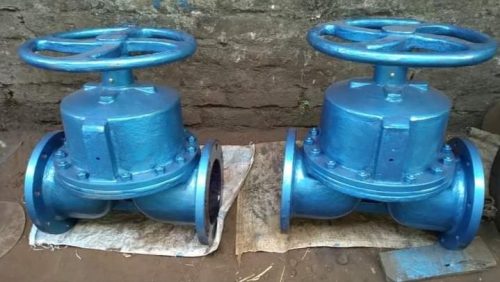
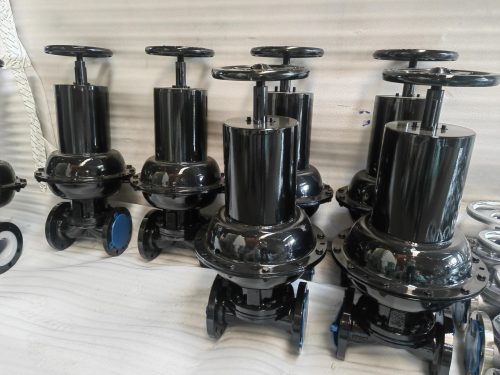
- Diaphragm Valve – Controls treatment chemicals and selected corrosive fluids
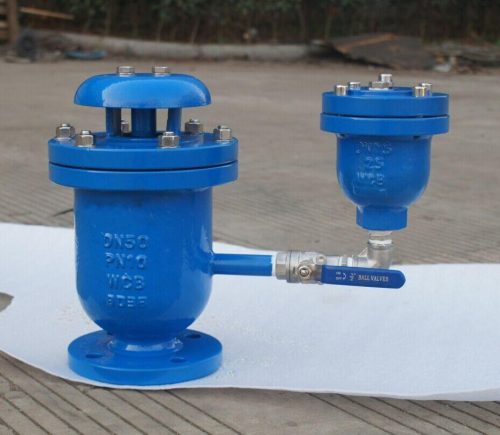
- Air Valve – Releases trapped air and admits air during pipeline filling, draining or vacuum conditions
- Foot Valve – Maintains pump priming in suitable suction-line applications
- Pressure-Reducing Valve – Maintains controlled downstream pressure
- Surge Anticipator Valve – Responds to pressure changes to help limit damaging pipeline surges
Water-System Operating Conditions
Important selection factors include:
- Pressure and Flow – Determine valve size, pressure rating and operating method
- Water Quality – Raw water, potable water, wastewater and seawater require different materials and coatings
- Solids Content – Sludge, grit and suspended particles may require unobstructed flow paths or abrasion-resistant construction
- Hydraulic Transients – Rapid pump starts, stops or valve closure can create surge and water hammer
- Corrosion Exposure – Internal water chemistry and the external environment affect body, trim, coating and fastener selection
Materials for Hydro & Water Treatment Valves
Materials should be selected according to water chemistry, corrosion exposure, pressure and temperature.
- Ductile Iron – Commonly used with fusion-bonded epoxy coating for water distribution and treatment systems
- Carbon Steel – Suitable for fabricated hydro valves and compatible water services
- Stainless Steel 304/316 – Used for corrosive water, treatment chemicals and wetted components
- Duplex and Super Duplex – Selected for chloride-bearing, brackish or aggressive water
- Bronze and Aluminium Bronze – Used for compatible water and corrosion-resistant service
- Special Alloys – Hastelloy, Alloy 20 or Titanium for specific highly corrosive chemical applications
Materials and coatings used for drinking-water systems may require project-specified potable-water approval.
Technical Details for Hydro & Water Valves
- Size and Pressure: Selected according to pipeline diameter, flow capacity, hydraulic head and design pressure
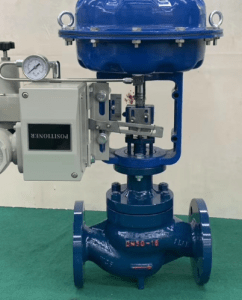
- Operation: Manual, gear-operated, electric, pneumatic, hydraulic or counterweight
- End Connections: Flanged, wafer, lugged, threaded, socket-weld or butt-weld
- Standards: EN 1074, EN 12516, ASME B16.34 or relevant valve-specific standards
- Dimensions: EN 558 or ASME B16.10, where applicable
- Testing: EN 12266-1, ISO 5208 or applicable project testing requirements
- Special Requirements: Epoxy coating, resilient lining, corrosion-resistant trim, surge-control features or potable-water approval where required
As a hydro and water treatment valve manufacturer, ValvesOnly Europe provides valve configurations for hydro, municipal water, wastewater and transmission projects, matched to the required service, pressure, materials, connections and operating method.
Need a Valve Solution For Your Project?
Talk to our engineer today and get a customised quote within 24 hours!