

F347 Valve Manufacturer in Germany
Valvesonly Europe manufactures F347 valves in accordance with ASTM A182 / ASME SA182 specifications, for high temperature and corrosive service environments. As a valve manufacturer, we produce F347 valve across gate, globe, ball, check, and butterfly configurations, machined and assembled at our facility with full traceability from raw material to finished product.
What is F347 Material?
F347 is a term used for forging and fabricated parts made of rolled or forged austenitic stainless steel in accordance with the standard specified in ASTM A182 grade F347 or UNS S34700. It is a niobium and tantalum stabilized type of 18-8 stainless steel designed to prevent carbide formation and intergranular corrosion at high temperature. Valve bodies, bonnets, and trim manufactured from F347 retain structural integrity in continuous service temperatures up to approximately 800°C (1472°F), making the material a standard choice for high temperature piping systems.
Types of F347 Valve:
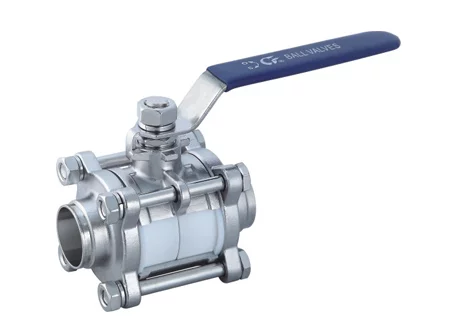
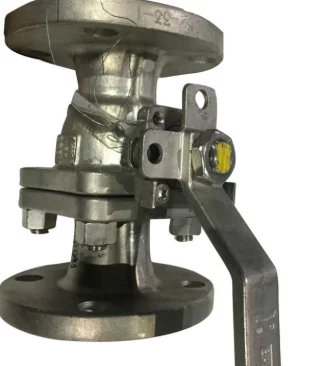
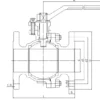
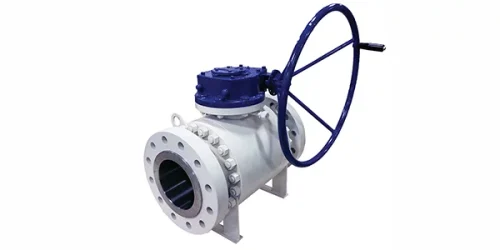
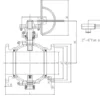
- F347 Ball Valve – Quarter turn on/off valve with a spherical bore for tight shutoff and fast operation in high temperature F347 stainless steel piping systems.
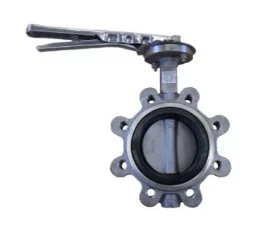
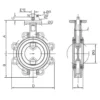
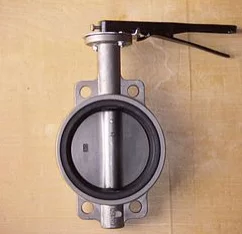
- F347 Butterfly Valve – Compact, lightweight disc type valve for flow regulation and isolation in large diameter F347 lines with minimal installation space.
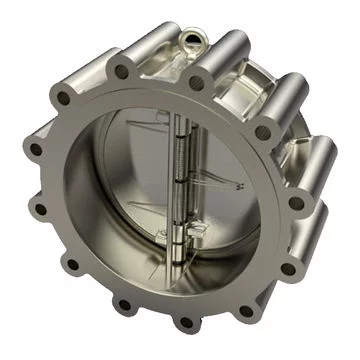
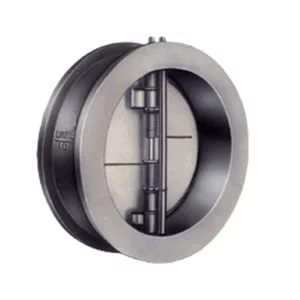
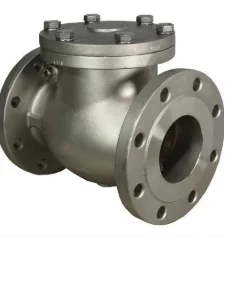
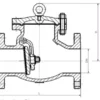
- F347 Check Valve – Non return valve permitting one directional flow to prevent backflow in F347 process and steam lines.
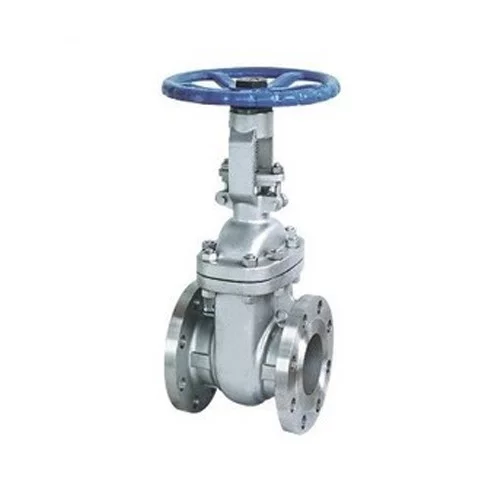
- F347 Gate Valve – Linear motion valve using a rising or non rising wedge/gate for full bore, low pressure drop shutoff in F347 high temperature systems.
- F347 Globe Valve – Multi turn valve with a movable disc and stationary ring seat, suited for throttling and flow control in F347 piping.
Chemical Composition of F347:
|
Element |
Composition (%) |
| Carbon (C) | 0.08 max |
| Manganese (Mn) | 2.00 max |
| Phosphorus (P) | 0.045 max |
| Sulfur (S) | 0.030 max |
| Silicon (Si) | 0.75 max |
| Chromium (Cr) | 17.00 – 19.00 |
| Nickel (Ni) | 9.00 – 13.00 |
| Niobium + Tantalum (Nb+Ta) | 10 x C min – 1.00 max |
| Iron (Fe) | Balance |
Mechanical Properties:
| Property | Value |
| Tensile Strength | 515 MPa min |
| Yield Strength (0.2% Offset) | 205 MPa min |
| Elongation in 2 in. (50mm) | 35% min |
| Reduction of Area | 50% min |
| Hardness | 187 HB max |
Manufacturing & Design Standards:
Valvesonly Europe fabricates F347 valves under the following governing standards:
- ASTM A182 / A182M – Standard specification for forged flanged and fittings, forged fittings, and valves for high temperature service
- ASME B16.34 – Valves flanged, threaded, and welding end
- ASME B16.10 – Face to face and end to end dimensions of valves
- ASME B16.5 / B16.47 – Pipe flanges and flanged fittings
- API 598 – Valve inspection and test procedures
- API 600 / API 602 – Design specifications for gate valves (cast and forged)
- BS EN 12266 – Testing of industrial valves
- MSS SP-25 – Standard marking system for valves, fittings, flanges, and unions
Pressure Temperature Ratings:
F347 valves are supplied in Class 150, 300, 600, 900, 1500, and 2500 ratings, with pressure-temperature values assigned per ASME B16.34 Group 2.8 material tables. Design pressure and temperature combinations are calculated based on the specific valve style, wall thickness, and end connection selected for the application.
Valve Sizes & End Connections:
- Size Range: 1/2″ (15 NB) to 24″ (600 NB), with larger sizes available on request
- End Connections: Flanged (RF/RTJ), Butt Weld (BW), Socket Weld (SW), and Threaded (NPT/BSP)
- Bore Options: Full bore and reduced bore configurations
- Operation: Handwheel, gear operated, lever, pneumatic actuated, and electric actuated
Manufacturing Process:
Valvesonly Europe manufactures F347 grade material by means of forging, CNC machining, heat treatment, and assembly under strict quality controls. The valves are then subjected to dimensional testing, surface testing, and pressure testing before being sent out; each shipment of raw materials receives a mill test certificate.
Testing & Quality Inspection:
- Hydrostatic Shell Test (per API 598 / ASME B16.34)
- Seat Leakage Test
- Positive Material Identification (PMI) Testing
- Radiographic Testing (RT) / Ultrasonic Testing (UT)
- Liquid Penetrant Testing (PT) / Magnetic Particle Testing (MT)
- Intergranular Corrosion (IGC) Testing per ASTM A262 Practice E
Applications of F347 Valve:
F347 valve is installed in systems handling elevated process temperatures and corrosive media across:
- Oil & gas processing and refining
- Petrochemical and chemical processing plants
- Power generation and steam service lines
- Marine and offshore piping systems
- Pulp and paper processing units
Why Choose Valvesonly Europe for F347 Valve?
- Direct manufacturing control – Every F347 valve is forged, machined, and assembled in-house, giving Valvesonly Europe full oversight of dimensional accuracy and material conformance at each production stage.
- Documented material traceability – Mill test certificates, heat numbers, and PMI results are maintained and supplied with every order for full chain of custody documentation.
- Standards compliant manufacturing – Production is carried out to ASTM A182, ASME B16.34, API 600/602, and API 598 requirements, with testing protocols aligned to each project specification.