We deliver to you every day from 7:00 to 23:00
How to Prevent Backflow: The Role of Check Valves in Industrial Systems
Why Backflow Control Is Crucial for Industrial Safety
Backflow is one of the most common yet dangerous problems in industrial piping systems. When fluid reverses direction unexpectedly, it can contaminate clean lines, damage equipment, and disrupt entire operations. That’s where Check Valves-the unsung heroes of flow control-come into play.
Today we will discuss how Check Valves work, their types, and why they are vital for preventing backflow in industries such as oil & gas, power, and water treatment. As a trusted Check Valves manufacturer in Europe, Valves Only Europe delivers precision-engineered solutions designed to maintain one-way flow, minimize pressure loss, and improve system integrity.
What Is a Check Valve and How Does It Work?
A Check Valve, also known as a non-return valve or one-way valve, allows fluid to flow in only one direction and automatically closes when the flow reverses. This simple yet effective mechanism makes it indispensable for preventing contamination and mechanical damage caused by backflow.
Flow Direction and Mechanism
The valve operates based on differential pressure. When the upstream pressure exceeds downstream pressure, the valve opens-allowing flow. When flow reverses or drops, the valve disc, ball, or piston automatically moves to the closed position, blocking the passage.
This automatic action eliminates the need for manual intervention and ensures consistent protection across pipelines, pumps, and compressors.
Design and Construction Features
Check Valves are designed to offer minimal pressure drop, compact structure, and smooth internal flow paths. The valve body is typically made of robust materials like carbon steel, stainless steel, ductile iron, or bronze to withstand high pressure and corrosive environments.
The disc and seat are precision-machined to deliver tight sealing performance. In high-pressure or high-temperature systems, the design may include spring-assisted closing to prevent valve slamming-a common cause of hydraulic shock and equipment failure.
Types of Check Valves
Different industries require different valve mechanisms depending on flow characteristics and system design. Here are the most common types:
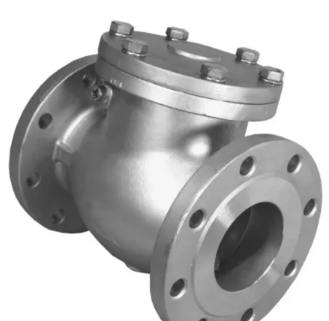
1. Swing Check Valve
Features a hinged disc that swings open with flow and closes when flow reverses. Ideal for low-pressure applications like water or gas distribution lines.
2. Lift Check Valve
Operates like a globe valve. The disc lifts vertically when the fluid flows and drops when flow stops. Suitable for high-pressure services and vertical pipelines.
3. Ball Check Valve
Uses a spherical ball that lifts off the seat when flow begins. Common in slurry or viscous fluid applications due to its self-cleaning design.
4. Dual Plate or Wafer Check Valve
Compact and lightweight, with two spring-loaded plates that open under flow and snap shut when flow reverses. Preferred in large pipelines for reducing space and weight.
5. Tilting Disc Check Valve
The disc tilts to open and close gradually, minimizing shock and vibration. Ideal for large-diameter or high-velocity systems.
Materials and Pressure Classes
Valves Only manufactures Check Valves in various materials and pressure classes to meet international standards and diverse service conditions:
- Materials: WCB, CF8, CF8M, CF3M, Duplex, and Alloy Steel.
- Pressure Ratings: Class 150 to 2500 / PN10 to PN420.
- End Connections: Flanged, Socket Weld (SW), Butt Weld (BW), or Threaded.
Each valve is designed to perform reliably under varying pressures and temperatures while maintaining optimal sealing efficiency and mechanical strength.
Design and Testing Standards
Our Check Valves are engineered to meet the highest design and testing standards, ensuring consistent quality and performance across industries.
Design Standards: API 6D, BS 1868, ASME B16.34
Testing Standards: API 598, ISO 5208
Face-to-Face Dimensions: ASME B16.10
End Connection Standards: ASME B16.5, B16.25
Every valve undergoes rigorous pressure, leak, and performance testing to verify proper sealing and smooth operation under dynamic flow conditions.
Common Industrial Applications
Check Valves play a critical role in protecting equipment and maintaining operational stability across multiple industries:
- Oil & Gas: Prevent reverse flow in process lines and compressors.
- Water & Wastewater Treatment: Stop contamination between clean and dirty streams.
- Power Generation: Control steam and condensate return in turbine lines.
- Chemical & Petrochemical: Safeguard sensitive instruments and process vessels.
- Marine & Offshore: Maintain fluid integrity in ballast and cooling systems.
Why Check Valves Are Vital in Industrial Systems
Without Check Valves, reverse flow can damage pumps, compressors, and downstream components-leading to contamination, pressure surges, and operational losses. Their automatic operation helps maintain safety, efficiency, and compliance with process standards.
In high-demand sectors like oil, gas, and power, even a small backflow can translate into massive downtime or safety risks. Check Valves act as the first line of defense, keeping your system’s integrity intact.
Why Choose Valves Only Europe
At Valves Only, we design and manufacture high-quality Check Valves built for precision and durability. Our valves are crafted to deliver optimum flow control, reduced pressure drop, and long-term performance under harsh service conditions.
Whether it’s for water, gas, steam, or aggressive chemical service, our engineering team can recommend the most suitable material, pressure class, and design.
From cast steel swing types to duplex wafer styles, we guarantee valves that deliver consistent one-way flow and prevent costly system failures.
Conclusion
Preventing backflow isn’t just about protecting pipelines, it’s about protecting your entire process. A well-chosen Check Valve helps maintain safety, efficiency, and reliability across all flow conditions.
Whether it’s oil, gas, or water service, Valves Only Europe guarantees safe one-way flow and operational peace of mind. Share your process medium, temperature, and pressure details with our team-our engineers will help you select the best Check Valve for your system.
Recent Posts
- Understanding Valve End Connections – Flanged, Threaded, Socket Weld and Butt Weld
- How to Prevent Backflow: The Role of Check Valves in Industrial Systems
- Gate Valve vs Ball Valve – Pressure Drop, Flow Control & Maintenance Compared
- Floating vs Trunnion Ball Valves : Material Benefits for Corrosive Applications
- What is a Pressure Reducing Valve? Function, Types & Uses