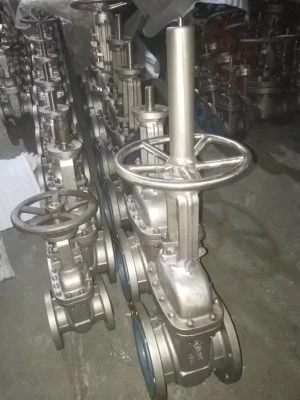
Our Shop
Contact us for all your questions and requirements
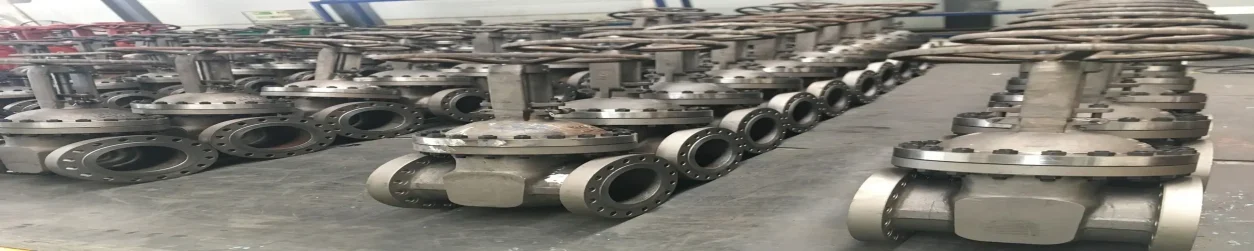
API Gate Valve Manufacturer in Italy
API gate valves are built for isolation service in high-pressure pipeline systems where full flow and dependable shutoff are essential. Their design allows the gate to move completely out of the flow path when open, which helps minimize pressure loss across the line.
ValvesOnly Europe manufactures API gate valves for industrial applications that require robust body construction, pressure-retaining integrity, and compliance with recognized international standards. As an API Gate Valve Manufacturer in Italy, the focus is on accurate machining, reliable sealing performance, and long service life in demanding operating conditions.
Working Principle of API Gate Valve
API gate valves operate through a linear motion mechanism in which the gate moves upward to open the valve and downward to stop the flow. When fully open, the flow passage remains unobstructed, making the valve suitable for systems that require minimal resistance.
This design is primarily intended for on-off isolation rather than throttling, especially in applications involving high pressure, large line sizes, and continuous service.
Advantages of API Gate Valves in Industrial Applications
- Full-port flow with low pressure loss
- Reliable shutoff in high-pressure service
- Suitable for large-diameter pipeline systems
- Strong body construction for demanding applications
- Long service life under continuous operating conditions
API Gate Valve Design Standards
API gate valves are manufactured in accordance with standards used for pressure-containing valve construction and industrial isolation service.
- API 600 – Steel gate valve design
- ASME B16.34 – Valves flanged, threaded, and welding end
- ASME B16.10 – Face-to-face dimensions
- ASME B16.5 – Flanged end dimensions
- ASME B16.25 – Buttwelding ends
Inspection and Testing Standards for API Gate Valves
Each valve is tested to verify pressure integrity, seat tightness, and operational reliability before dispatch.
- API 598 – Valve inspection and testing
- ISO 5208 – Leakage testing
- EN 12266 – Pressure testing
Body and Trim Material Compatibility
Material selection depends on service pressure, temperature, and media properties, especially in high-pressure, corrosive, and elevated-temperature environments.
| Material | European Grade | Typical Applications |
|---|---|---|
| Carbon Steel | EN 1.0619 / 1.0618 | Oil and gas pipelines, high-pressure isolation service |
| Stainless Steel | EN 1.4408 / 1.4404 | Chemical processing, general industrial service |
| Forged Stainless Steel | EN 1.4404 | Compact high-pressure gate valve construction |
| Duplex Stainless Steel | EN 1.4462 | Offshore systems and corrosive process media |
| Super Duplex Stainless Steel | EN 1.4410 | High chloride and aggressive operating conditions |
| Inconel | EN 2.4816 / 2.4856 | High-temperature and oxidation-resistant applications |
| Hastelloy | EN 2.4819 / 2.4602 | Severe corrosion resistance in chemical service |
| Alloy 20 | EN 2.4660 | Acidic media and chemical handling systems |
| Incoloy | EN 1.4876 / 2.4858 | Elevated temperature service and thermal systems |
| Titanium | EN 3.7035 / 3.7165 | Highly corrosive and seawater applications |
Industrial Applications of API Gate Valves
- Oil and Gas Processing – Mainline isolation in upstream and downstream systems
- Power Generation – Steam and condensate isolation service
- Petrochemical Plants – Isolation in high-pressure process lines
- Chemical Processing – Shutoff duty in corrosive fluid handling systems
- Marine and Offshore – Pipeline isolation in seawater and process service
- Water and Wastewater – Isolation in industrial utility networks
Special Features and Customization Options
- Bolted bonnet and pressure seal configurations based on service conditions
- Rising stem design for clear valve position indication
- Custom end connections to suit project piping requirements
- Hard-faced seating options for extended service life
- Compatibility with gearbox or actuator operation for larger sizes
Correct valve selection depends on pressure class, line size, operating temperature, end connection, and media characteristics to ensure dependable isolation performance throughout service life.
Showing the single result