
F317L Valve Manufacturer in Germany
F317L valves are used in chemical and process systems requiring greater molybdenum content and localized-corrosion resistance than conventional 316L stainless steel. ASTM A182 F317L is a low-carbon austenitic stainless-steel forged grade associated with UNS S31703, providing improved resistance to pitting and selected acidic environments.
F317L Valve for Acidic and Chloride Service
F317L contains more molybdenum than conventional 316L stainless steel.
The higher molybdenum content improves resistance to localized corrosion in suitable environments, particularly:
- Pitting
- Crevice corrosion
- Selected chloride-bearing fluids
- Certain acidic process streams
The low carbon content reduces susceptibility to sensitization during welding and thermal exposure.
F317L can therefore be considered for:
- Chemical processing systems
- Pulp and paper
- Acid transfer
- Marine process lines
- Industrial wastewater
- Process fluid piping
It should not be described as universally suitable for seawater or all concentrated acids. More highly alloyed materials may be necessary for severe chloride service.
Low Carbon Austenitic Stainless Steel Properties
F317L is an austenitic chromium-nickel-molybdenum stainless steel.
Its main characteristics include:
- Low carbon content
- Austenitic microstructure
- Higher molybdenum than 316L
- Good weldability
- Resistance to sensitization
- Improved localized-corrosion resistance compared with 316L in suitable environments
- Useful mechanical properties across a wide range of industrial conditions
The low carbon level reduces chromium-carbide precipitation during welding, helping retain corrosion resistance near welded regions.
ASTM A182 F317L Composition
Typical F317L chemistry includes:
| Element | Typical Range / Limit |
| Chromium | 18–20% |
| Nickel | 11–15% |
| Molybdenum | 3–4% |
| Carbon | 0.030% max |
| Manganese | 2.00% max |
| Silicon | Approx. 1.00% max |
| Phosphorus | 0.045% max |
| Sulphur | 0.030% max |
| Nitrogen | Controlled according to specification |
| Iron | Balance |
The material designation depends on component form:
- Forged: ASTM A182 F317L / UNS S31703
- Cast 317L-type construction: ASTM A351 CG3M where specified
CG3M should be described as the cast 317L-type grade rather than “cast F317L.”
Valve Types and Construction
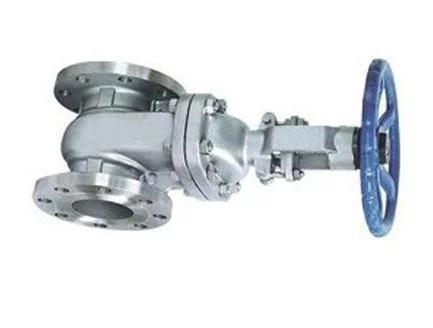
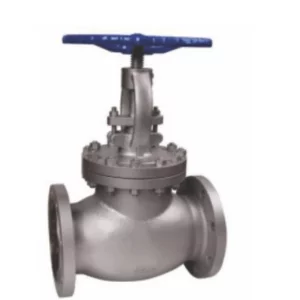
The current F317L range includes Gate and Globe Valve designs.
F317L Gate Valve
- Used for straight-through isolation in corrosive process piping.
- Operates fully open or fully closed.
- Options include rising stem, solid/flexible wedge, bolted or pressure-seal bonnet, and flanged/butt-weld ends.
F317L Globe Valve
- Used for flow regulation and shut-off.
- Suitable for throttling, frequent operation and process-flow adjustment.
- Can be used for compatible steam and utility service.
Technical Specifications
| Parameter | Typical Specification |
| Forged Material | ASTM A182 F317L |
| UNS | S31703 |
| Cast 317L-Type Material | ASTM A351 CG3M where applicable |
| Valve Types | Gate Valve, Globe Valve |
| Size Range | DN15–DN600 |
| Pressure Rating | PN10–PN160 / ASME Class 150–2500 depending on valve design |
| Trim | F317L, Stainless Steel or hard-faced trim |
| Seat | Metal Seat / service-specific seat construction |
| Bonnet | Bolted, Welded or Pressure Seal depending on configuration |
| End Connections | RF/RTJ Flanged, Butt Weld, Socket Weld, Threaded |
| Operation | Handwheel, Gear, Pneumatic, Electric or Hydraulic where applicable |
| Pressure Design | ASME B16.34 / valve-specific standard |
| Face-to-Face | ASME B16.10 / EN 558 where applicable |
| Testing | API 598 / EN 12266-1 |
| Documentation | EN 10204 3.1 / 3.2 where specified |
Molybdenum Content and Corrosion Resistance
Molybdenum is one of the key differences between F317L and conventional 316L stainless steel.
Its higher molybdenum content improves resistance to localized breakdown of the passive film.
This can provide improved performance against:
- Chloride pitting
- Crevice attack
- Certain reducing acids
- Corrosive process condensates
Actual performance is controlled by:
- Chloride concentration
- Temperature
- pH
- Acid concentration
- Fluid velocity
- Crevice conditions
- Oxidizing contaminants
Increasing temperature can significantly reduce the corrosion margin even when the alloy performs well at ambient conditions.
The process medium should therefore be checked against suitable corrosion data before F317L is selected.
F317L and 316L Comparison
F317L and 316L are both low-carbon molybdenum-bearing austenitic stainless steels.
316L
316L commonly contains approximately 2–3% molybdenum and is widely used for:
- General chemical service
- Process water
- Marine atmosphere
- Moderate chloride conditions
F317L
F317L generally contains approximately 3–4% molybdenum.
The increased molybdenum provides:
- Greater pitting resistance
- Improved crevice-corrosion resistance
- Better performance in selected acidic and chloride-containing media
A useful material hierarchy for increasing chloride severity may therefore move from:
316L → F317L → higher-alloy materials such as F44 or suitable Duplex/Super Duplex
depending on operating conditions.
Chemical and Process Applications
F317L valves can be used in:
- Chemical processing
- Pulp and paper plants
- Acid-transfer systems
- Oil and gas utilities
- Industrial wastewater
- Marine process systems
- Petrochemical plants
- Power-generation auxiliaries
- Effluent treatment
Gate valves provide pipeline isolation, while globe valves are used where throttling or repeated flow adjustment is required.