
F44 Valve Manufacturer in Germany
F44 valves are used in piping systems exposed to seawater, concentrated chlorides and aggressive chemical media where conventional 316L stainless steel may not provide sufficient resistance to localized corrosion. ASTM A182 F44 is a forged super-austenitic stainless steel grade associated with UNS S31254, commonly referred to as a 6% molybdenum or 6Mo alloy.
F44 Valve Performance in Chloride Rich Media
Chloride-containing fluids can cause localized corrosion even when the general surface condition of stainless steel appears acceptable.
The principal concerns include:
- Pitting corrosion
- Crevice corrosion
- Chloride stress-corrosion cracking
- Attack beneath deposits or gaskets
- Corrosion in stagnant seawater conditions
F44 contains higher levels of molybdenum and nitrogen than conventional 316L stainless steel. These additions improve resistance to localized chloride attack.
Typical applications include:
- Seawater
- Brine
- Desalination systems
- Offshore process water
- Chemical injection
- Chloride-bearing process streams
- Flue-gas treatment systems
Material suitability must still be confirmed against actual temperature, chloride concentration, pH and contaminants.
UNS S31254 6Mo Material Composition
UNS S31254 is a highly alloyed austenitic stainless steel containing approximately 20% chromium, 18% nickel and 6% molybdenum together with nitrogen and copper additions.
Typical chemistry includes:
| Element | Typical Range |
| Chromium | Approx. 19.5–20.5% |
| Nickel | Approx. 17.5–18.5% |
| Molybdenum | Approx. 6.0–6.5% |
| Nitrogen | Approx. 0.18–0.25% |
| Copper | Approx. 0.5–1.0% |
| Carbon | Low carbon content |
| Iron | Balance |
The combination of chromium, molybdenum and nitrogen provides substantially greater localized-corrosion resistance than standard 300-series stainless steels.
For valve construction, the material designation should be stated according to the component form:
- Forged components: ASTM A182 F44 / UNS S31254
- Cast S31254-type components: appropriate cast grade such as ASTM A351 CK3MCuN where specified
Valve Configurations and Construction
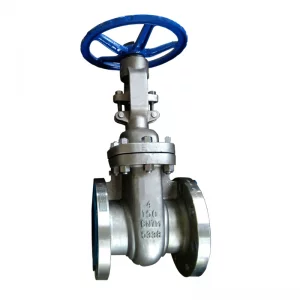
- F44 Gate Valve: Used for full-open/full-close isolation with low pressure loss. Available with bolted or pressure-seal bonnet, rising stem, flexible/solid wedge, and flanged or butt-weld ends.
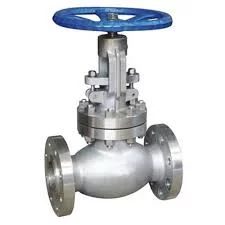
- F44 Globe Valve: Used for flow regulation, throttling and frequent isolation. Trim and seat materials are selected based on pressure drop, temperature and corrosion conditions.
Technical Specifications
| Parameter | Typical Specification |
| Material | ASTM A182 F44 / UNS S31254 |
| Material Family | 6Mo Super-Austenitic Stainless Steel |
| Valve Types | Gate Valve, Globe Valve |
| Size Range | DN15–DN600 |
| Pressure Rating | PN10–PN160 / ASME Class 150–2500 depending on design |
| Body / Bonnet | ASTM A182 F44 forged construction where specified |
| Cast Construction | ASTM A351 CK3MCuN where applicable |
| Trim | F44, compatible stainless steel or hard-faced material |
| Seat | Metal Seat; service-specific construction |
| Packing | PTFE, Graphite or service-compatible packing |
| End Connections | RF/RTJ Flanged, Butt Weld, Socket Weld, Threaded depending on configuration |
| Operation | Handwheel, Gear, Pneumatic or Electric |
| Pressure Design | ASME B16.34 / applicable EN requirements |
| Face to Face | ASME B16.10 / EN 558 where applicable |
| Testing | API 598 / EN 12266-1 where applicable |
| Documentation | EN 10204 3.1 / 3.2, PMI and NDT where specified |
Mechanical and Corrosion Properties
F44 combines high corrosion resistance with greater mechanical strength than conventional austenitic stainless steels such as 316L.
Important properties include:
- High resistance to chloride pitting
- Resistance to crevice corrosion
- Good resistance to chloride stress-corrosion cracking
- Good ductility
- Austenitic microstructure
- Good weldability using controlled procedures
- Higher strength than conventional 300-series stainless steel
The alloy is particularly valuable where corrosion resistance must be maintained without switching to a nickel-base alloy.
F44 and Super Duplex Comparison
F44 and Super Duplex are both considered for severe chloride-bearing service, but they achieve their properties through different metallurgical systems.
F44 / S31254
F44 is a fully austenitic 6Mo stainless steel.
Advantages include:
- High PREN
- Good localized-corrosion resistance
- Austenitic toughness
- No ferrite/austenite phase-balance requirement during welding
Super Duplex
Super Duplex grades such as S32750 and S32760 contain a mixed ferritic-austenitic microstructure.
They generally provide:
- Higher mechanical strength
- High chloride resistance
- High PREN
- Strong stress-corrosion cracking resistance
But welding and heat treatment require careful control of phase balance.
Selection between F44 and Super Duplex should therefore consider:
- Chloride level
- Operating temperature
- Welding requirements
- Required mechanical strength
- Piping design
- Fabrication capability
- Project material specification
Neither material should be considered automatically superior for every seawater application.
Seawater and Chemical Applications
F44 valves are used in:
- Seawater intake systems
- Desalination plants
- Reverse-osmosis systems
- Offshore platforms
- Seawater injection
- Chemical injection systems
- Brine handling
- Flue-gas desulphurization
- Chemical processing
- Pulp and paper bleaching
- Coastal power plants
- Marine process piping
Gate valves are mainly selected for isolation, while globe valves are used where controlled flow regulation is required.