
Surge Anticipator Valve Manufacturer in Germany
A surge anticipator valve protects pumped water systems against hydraulic transients caused by sudden pump stoppage, power failure or rapid changes in flow velocity. The hydraulically operated valve senses the initial pressure drop associated with a pump trip and opens before the returning high-pressure wave reaches the pumping station, allowing surge energy to be discharged safely.
Pipeline Protection Against Hydraulic Transients
When a pump stops suddenly, fluid momentum in a rising main continues temporarily even though the pump is no longer supplying energy.
The resulting sequence can create:
- A rapid pressure reduction near the pump.
- Deceleration and possible reversal of the water column.
- A returning high-pressure wave.
These pressure changes can damage:
- Pumps
- Check valves
- Pipe joints
- Fittings
- Instruments
- Pipeline supports
A surge anticipator valve opens before the returning high-pressure wave arrives, providing a controlled discharge path for the excess hydraulic energy.
Pilot Response to Pump Trip Conditions
- The valve is normally installed on an off line branch connected to the pump discharge header.
- During normal pumping operation, line pressure keeps the main valve closed.
- When the pump stops abruptly, the low pressure transient is sensed by the pilot system. This initiates opening of the main valve before the high pressure return wave develops at the pumping station.
- Because the valve is already open when the high pressure wave arrives, part of the surge flow is discharged rather than being absorbed entirely by the pipeline.
Low Pressure and High Pressure Pilot Operation
A typical surge anticipator valve uses two pressure pilots.
- Low Pressure Pilot: Detects the pressure drop after pump trip and initiates main-valve opening.
- High Pressure Pilot: Responds to the returning pressure surge and controls relief of excess pressure.
- Dual-Pilot Function: Provides both surge anticipation and overpressure protection.
Technical Specifications
| Parameter | Typical Specification |
| Size Range | DN50–DN600 |
| Pressure Rating | PN10, PN16, PN25, PN40 |
| Main Valve | Hydraulically operated diaphragm- or piston-actuated control valve |
| Body Materials | Ductile Iron, Cast Steel, Stainless Steel |
| Internal Trim | Stainless Steel 316 |
| Seat Ring | Bronze or Stainless Steel |
| Diaphragm | Reinforced NBR / EPDM depending on configuration |
| Pilot System | Adjustable Low-Pressure and High-Pressure Pilots |
| End Connection | Flanged |
| Coating | Fusion-Bonded Epoxy for ductile-iron water-service bodies |
| Typical Temperature | Approximately -10°C to +80°C |
| Applicable Standard | AWWA C530 for applicable pilot-operated control valve construction |
| Testing | EN 12266-1 / project-specific functional testing |
| Flanges | EN 1092-2 where applicable |
Surge Analysis and Valve Sizing
Surge anticipator valves should never be selected from pipe size alone.
Sizing requires hydraulic transient data such as:
- Number and type of pumps
- Pump operating flow
- Pump shut-off head
- Static head
- Pipeline length
- Pipeline diameter
- Pipe material and pressure class
- Fluid velocity
- Pump stopping time
- Minimum transient pressure
- Maximum allowable surge pressure
Established surge-valve manufacturers explicitly require pump and pipeline data for sizing because incorrect sizing can prevent the valve from providing effective protection.
Discharge Line and Installation Requirements
The valve is normally installed on a branch from the pump discharge header and discharges to:
- Atmosphere
- Sump
- Storage basin
- Return reservoir
- Another hydraulically suitable location
The discharge line must be sized so that backpressure does not prevent the valve from passing the required surge flow.
Installation should provide:
- Adequate pipe support
- Accessible pilot controls
- Isolation valve where required
- Suitable drainage
- Pressure-sensing connection
- Protection against freezing
- Safe discharge routing
For remote sensing arrangements, sensing lines must be installed to prevent trapped air from affecting pilot response.
Pumping Station Applications
Surge anticipator valves are used in:
- Long distance water mains
- Booster pumping stations
- Raw water pumping systems
- Treated water transmission
- Irrigation pumping
- Desalination plants
- High static head pipelines
- Large distribution networks
The valve should be considered alongside check valves, air valves, surge vessels and other transient control equipment as part of the complete hydraulic protection strategy.
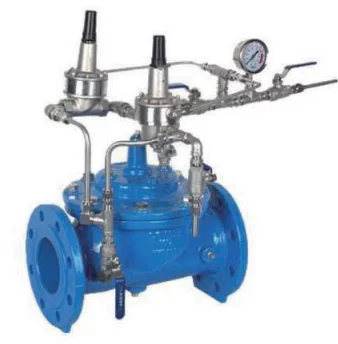
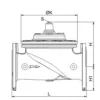
Surge Anticipator Valve
Price range: €609.00 through €2,114.00