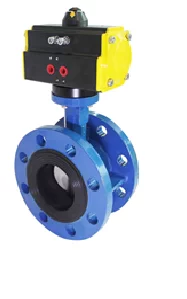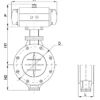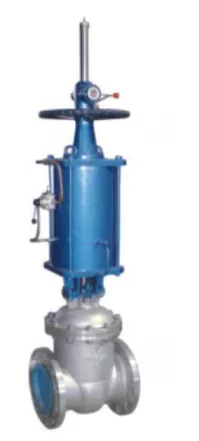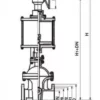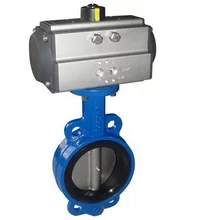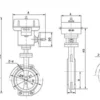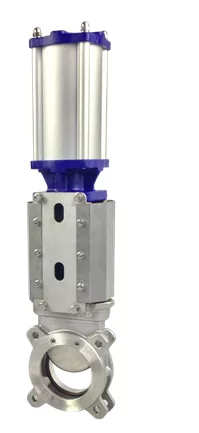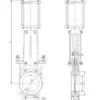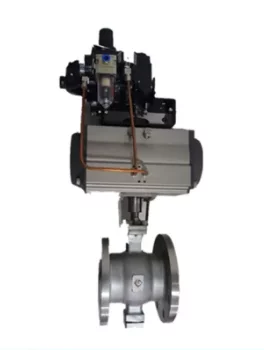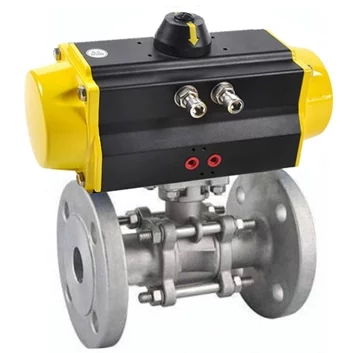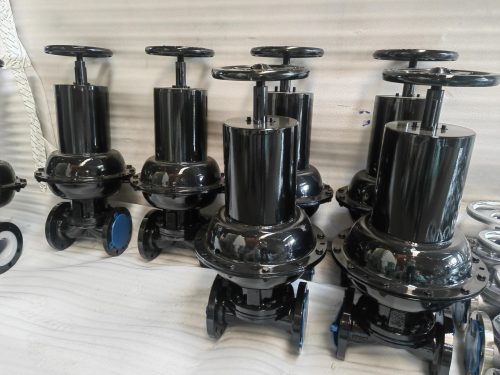

Pneumatic Actuated Valve Manufacturer in Germany
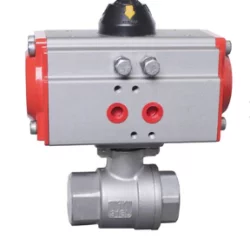
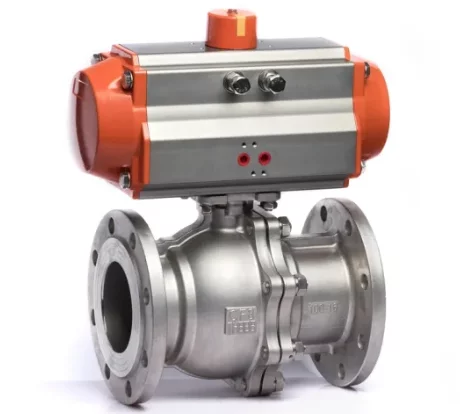
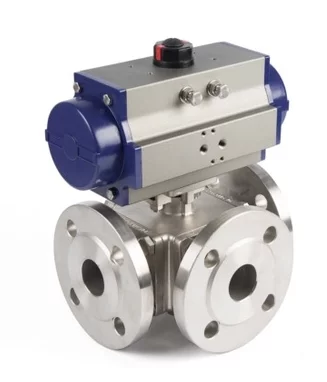
Pneumatic actuated valves use compressed air to automate valve opening, closing or positioning in industrial piping systems. Depending on the valve design, the actuator produces rotary or linear movement and can be configured for on off isolation or modulating control. Their fast response and ability to provide a defined fail position make pneumatic systems suitable for automated process lines and safety-related applications.
Air Operated Valve Automation:
A pneumatic actuator converts compressed air pressure into mechanical movement. Air enters one or more actuator chambers and acts against a piston or diaphragm, producing either rotary torque or linear thrust.
The actuator then transfers this force to the valve stem or shaft.
Pneumatic automation is used for:
- Remote pipeline isolation
- Emergency shutdown
- Sequence control
- Process flow regulation
- Frequent cycling
- Automated batching
- Operation in inaccessible locations
Spring Return and Double Acting Actuators:
Spring Return Actuator
- Uses air in one direction and spring force for return.
- Moves to a preset fail open or fail closed position if air supply is lost.
- Selected according to process safety requirements.
Double Acting Actuator
- Uses compressed air for both opening and closing.
- Suitable where higher torque and controlled movement are required.
- Typically remains in its last position after air loss unless a separate fail-safe system is provided.
Quarter Turn and Linear Valve Configurations:
Pneumatic actuators can operate different valve motions.
Quarter Turn Valves
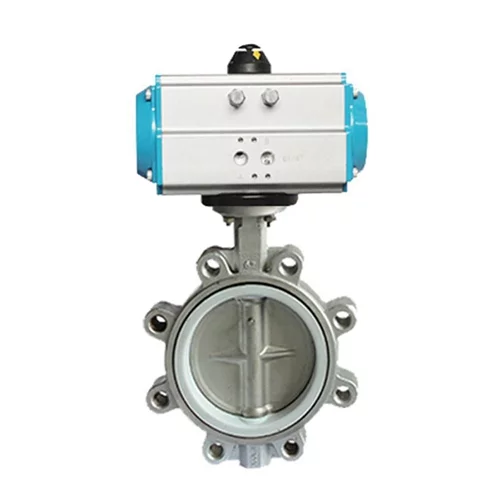
- Ball, butterfly and plug valves normally require approximately 90° rotation.
- Rack and pinion actuators provide compact quarter turn operation, while scotch yoke actuators can provide higher torque characteristics for larger valves and demanding pressure conditions.
Linear Valves
- Globe, gate and knife gate valves require linear stem or gate movement.
- Pneumatic diaphragm or piston cylinder actuators can generate the thrust required for these configurations.
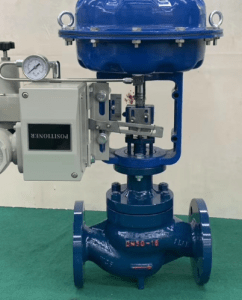
- Globe and control valve assemblies can also use pneumatic actuators for modulating service where intermediate positioning is required.
Air Supply and Torque Requirements:
Important sizing parameters include:
- Valve breakaway torque
- Running torque
- Seating torque
- Stem thrust
- Maximum differential pressure
- Available instrument-air pressure
- Required safety factor
- Opening and closing time
- Cycle frequency
- Fail safe spring requirement
Technical Specifications:
| Parameter | Typical Specification |
| Valve Types | Ball, Butterfly, Gate, Globe, Plug, Knife Gate and Control Valve |
| Size Range | DN15–DN1200 depending on valve type |
| Pressure Rating | PN10–PN100; ASME Class 150–2500 depending on valve design |
| Actuator Types | Rack and Pinion, Scotch Yoke, Diaphragm, Pneumatic Piston |
| Actuation | Spring Return / Double Acting |
| Typical Air Supply | Approx. 4–8 bar |
| Motion | Quarter Turn or Linear |
| Fail Position | Fail Open, Fail Closed, Fail in Place for applicable configurations |
| Body Materials | Carbon Steel, Stainless Steel, Cast/Ductile Iron, Duplex, Super Duplex and special alloys |
| Seat Materials | PTFE, RPTFE, EPDM, NBR, FKM, PEEK or Metal depending on valve |
| End Connections | Flanged, Wafer, Lug, Butt Weld, Socket Weld, Threaded |
| Accessories | Solenoid Valve, Positioner, Limit Switch Box, AFR, Quick Exhaust Valve |
| Valve Testing | EN 12266-1 / API 598 or valve specific requirement |
| Actuator Protection | Weatherproof or hazardous area configurations according to selected actuator |
Solenoid, Positioner and Limit Switch Options
Pneumatic actuator assemblies can incorporate accessories for control, air preparation and position monitoring.
Solenoid Valve
The solenoid valve directs compressed air to and from the actuator in response to an electrical command from a PLC, DCS or local control system.
Positioner
A positioner compares the required valve position with actual stem or shaft position and adjusts actuator air pressure accordingly.
Electro-pneumatic positioners commonly accept signals such as 4–20 mA for modulating applications.
Limit Switch Box
Limit switches provide electrical confirmation of valve open and closed positions for remote indication and interlocking.
Additional accessories can include:
- Air filter regulator
- Pressure gauge
- Quick exhaust valve
- Speed control valve
- Position transmitter
- Manual override
Fail Safe Position Selection:
The correct fail position depends on what must happen if instrument air or electrical control is lost.
- Fail Closed: Valve closes on air loss to stop process flow in fuel, chemical feed or isolation service.
- Fail Open: Valve opens on air loss where continued flow is needed, such as cooling or protective utility service.
- Fail in Place: Valve remains near its last position using a double acting actuator with suitable air-lock controls.
- Selection: Fail action should be based on process safety and hazard requirements.
Automated Process Applications:
Pneumatic actuated valves are used where reliable remote operation or rapid response is required.
Typical applications include:
- Process isolation
- Emergency shutdown systems
- Chemical dosing
- Steam and utility systems
- Cooling water networks
- Oil and gas process lines
- Power generation systems
- Water and wastewater treatment
- Marine piping
- Slurry handling
- Tank inlet and outlet systems
- Automated batch processes