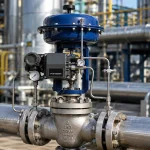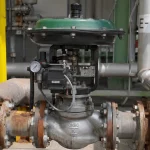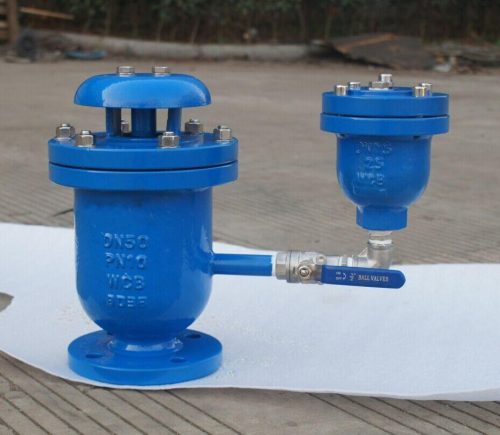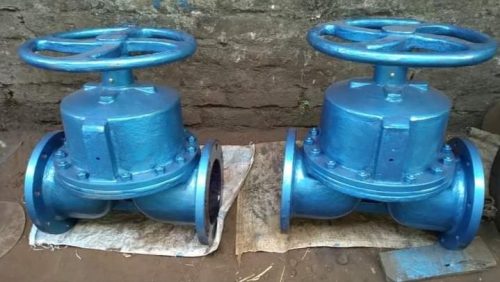


A Control Valve for a European plant requires more than checking pressure rating, material, and valve size. For applications across the region, selecting the right Control valve in Europe also involves meeting applicable EU regulatory requirements, including PED 2014/68/EU where within scope. Understanding CE marking, PED categorisation, conformity assessment, and required documentation helps buyers verify compliance before installation.
What is CE Marking and Why Does it Apply to Control Valve?
The CE marking is the manufacturer’s assertion that his product complies with all relevant EU directives concerning safety, health, and environmental protection. This is neither a quality mark nor an official certification from any governmental body, it is a self declaration based on technical data and independent evaluation, wherever necessary.
For control valves, CE marking is usually required since the valve is a pressurized component. When the pressure and volume reach certain values, then the valve is covered by one or more of the EU directives and thus requires a CE marking before it can be placed on the market.
The Basics of CE Marking in Industrial Equipment:
CE marking is not a single directive it is a mark that confirms compliance with whichever directives apply to a given product. A control valve might need to meet requirements from the Pressure Equipment Directive, the ATEX Directive, or the Machinery Directive, depending on its design and intended use. The manufacturer is responsible for identifying which directives apply and ensuring the valve satisfies all of them before affixing the mark.
Key points to remember:
- CE marking is a self declared statement, not a government issued certificate
- It confirms compliance with every applicable directive, not just one
- The manufacturer decides which directives apply based on the valve’s design and use
- The mark must be affixed before the valve is placed on the EU market
- Buyers should treat CE marking as a starting point for verification, not a final answer
Understanding the Pressure Equipment Directive (PED 2014/68/EU):
PED sets out the safety requirements for equipment subjected to pressure above 0.5 bar. It covers design, manufacturing, and conformity assessment procedures for items such as valves, vessels, and piping.
Which Control Valve Fall Under PED?
Not every control valve needs PED assessment. Small valves used in low pressure systems may fall outside the directive’s scope. Whether a valve is included depends on a combination of factors, the pressure rating, the nominal size, and the fluid group (hazardous or non hazardous) it is designed for. Suppliers should be able to show the calculation used to determine whether a specific valve model falls under PED.
Factors that determine PED scope:
- Maximum allowable pressure (PS) of the valve
- Nominal size (DN) of the valve body
- Fluid group classification: Group 1 (hazardous) or Group 2 (non-hazardous)
- The pressure volume product calculated from the above
- Intended service conditions and installation context
PED Categories Explained (I, II, III, IV) and Risk Based Classification:
PED uses a risk based classification system with four categories, ranging from Category I (lowest risk) to Category IV (highest risk). Classification is based on the pressure volume product and the fluid group. Higher categories require more rigorous conformity assessment, including greater involvement from an external Notified Body. A valve rated for high pressure service in a hazardous fluid group will sit in a higher category than a comparable valve in a low pressure, non hazardous application, and the paperwork required from the manufacturer scales accordingly.
CE Marking vs. PED: How the Two Frameworks Work Together?
CE marking is the outcome, PED is one of the possible pathways that leads to it. A Control valve that falls under PED’s scope must satisfy PED’s technical requirements, and once it does, the manufacturer applies the CE mark as visible proof of that compliance. If the same valve also falls under another directive ATEX, for example it must satisfy that directive too before the CE mark can be applied. In short, CE marking sums up compliance with every applicable directive, not PED alone.
Conformity Assessment Modules for Control Valve:
PED offers several assessment modules, and manufacturers select the one that matches their valve’s category and their own quality system.
Module A vs. Module H vs. Notified Body Involvement:
Module A allows manufacturers to self certify low risk equipment based on internal production control, with no external body involved. Module H, by contrast, applies to higher risk categories and requires a Notified Body to audit the manufacturer’s full quality assurance system, covering design, production, and final inspection. Between these two extremes sit several intermediate modules that combine varying degrees of internal control and external verification. Buyers should confirm which module was used for a given valve, since it indicates how much independent scrutiny the design and manufacturing process received.
Key Documentation Requirements:
Declaration of Conformity:
This document is the manufacturer’s formal statement that the valve meets all applicable EU directives. It should list the directives involved, the conformity assessment module used, and, where relevant, the Notified Body’s identification number.
Technical Files and Material Certifications:
A technical file typically includes design calculations, drawings, a risk assessment, and test reports. Material certifications (such as 3.1 certificates per EN 10204) confirm that the materials used match the specified grades and were tested accordingly.
Traceability Requirements:
Components and materials used in the valve should be traceable back to their source, including heat numbers for castings and forgings. This traceability supports both quality assurance and any future investigation if a failure occurs in service.
Documents to request from a supplier:
- Declaration of Conformity naming the specific valve model and serial range
- Technical file with design calculations and test reports
- Material certificates (EN 10204 3.1 or equivalent)
- Heat numbers or batch records for pressure-retaining parts
- Pressure test reports tied to the actual delivered units
Common Compliance Pitfalls in Control Valve Procurement:
- Assuming a supplier’s general CE marking on other products automatically covers a specific valve model
- Overlooking whether accessories like actuators and positioners have their own separate compliance requirements
- Accepting a Declaration of Conformity without checking that it references the correct directive and category
- Failing to confirm Notified Body involvement for higher PED categories
- Missing documentation for valves imported from outside the EU
How to Verify a Manufacturer’s CE/PED Compliance Before You Buy?
Request the Declaration of Conformity and technical file for the specific valve model and serial range being purchased. Confirm the PED category assigned and cross check it against the valve’s pressure, size, and fluid group. If a Notified Body was involved, verify its identification number against the EU’s NANDO database. Ask for material certificates and pressure test reports tied to the actual batch being supplied, not generic documentation for the product line.
Verification steps before purchase:
- Match the Declaration of Conformity to the exact model and serial range ordered
- Cross check the stated PED category against pressure, size, and fluid group
- Confirm Notified Body details against the NANDO database
- Request batch specific material certificates and test reports
- Ask for evidence of the conformity assessment module used
Other Relevant EU Directives to Watch:
ATEX (for hazardous areas):
Valves installed in potentially explosive atmospheres may also need to meet ATEX requirements, covering ignition risk from mechanical and electrical sources.
Machinery Directive (where applicable):
Where a Control valve assembly includes powered actuation and moving parts that pose mechanical hazards, the Machinery Directive may apply alongside PED.
Compliance Checklist for Your Next Control Valve Purchase:
Documentation of compliance goes hand in hand with the size, material, and characteristic curve of a control valve order. For control valve manufactured by ValvesOnly Europe, the standard documentation checklist may include the PED Category, Conformity Assessment Module, Declaration of Conformity, material certificates, and any other applicable EU directive requirements.